Skip to content

I build contactless radar sensing systems to measure Alzheimer’s progression.

Custom mmWave hardware, the embedded stack that runs it, the clinical platform that receives it, and the family of movement, sleep and vital-sign indices derived from the returns. A memory care study at a Minneapolis facility is in University review.

FMCW
60 GHzFMCW
custom sensing PCB
8-layercustom sensing PCB
frames / 24 h soak
2.28 Mframes / 24 h soak
defined indices
8defined indices
Fig. 1Micro-Doppler return, 60 GHz FMCW. The steady horizontal band is torso velocity; the arcs above and below it are limbs. Gait signature recorded on the bench hardware.

What I have built.

Selected systems

Five systems, each a layer of the same instrument: the sensing hardware, the software that runs on it, the platform that receives it, the screens care staff use, and the facility it is installed in.

01

Radar sensing board

Hardware designEVT-0.3

Invent

Evaluation radar kits are built for a lab bench. A sensor that lives on a resident’s wall for months has to stay cool, quiet and dark, survive its own faults, and ask nothing of anyone in the room. No evaluation kit is designed for that, so the sensor had to be built.

Build

An 8-layer board built around TI’s IWR6843AOP 60 GHz antenna-on-package radar and an Octavo OSD6254 system-in-package host (TI AM6254). I did the power tree and reset design, and brought the radar up on TI evaluation hardware first.

Deploy

EVT-0.3 is the third design revision and the first to be built, at EI Microcircuits in Mankato, Minnesota. Each revision is checked against the datasheets and the schematic before release, and the architecture ran on TI evaluation boards before the first layout.

Radar
TI IWR6843AOP, 60 GHz FMCW
Host
Octavo OSD6254 SiP (TI AM6254)
Stack-up
8-layer, controlled impedance
Enclosure
Wall-mounted, no status light
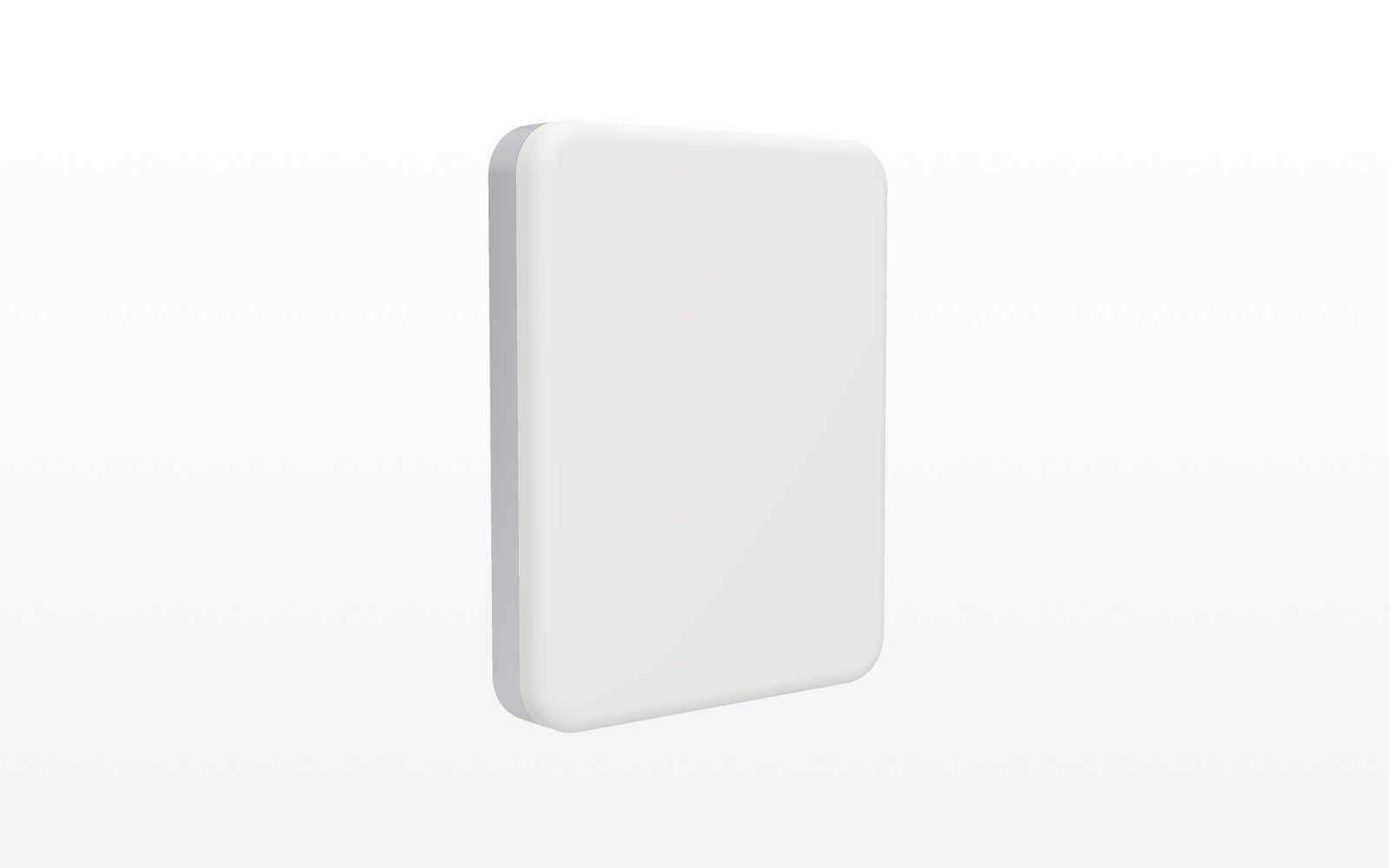
Rendered white rounded-rectangle enclosure, three-quarter view on a light grey ground.
Fig. 2Enclosure, EVT-0.3 design render. A closed white case on the wall: nothing worn, nothing to press, no light.
02

Embedded acquisition and edge inference

Firmware and signal processing24 h bench soak

Invent

Fall detection that phones home to a server introduces latency and a dependency on the building’s network at the exact moment neither can be trusted. The decision has to happen on the device.

Build

Yocto-built embedded Linux on TI AM62x, with U-Boot and the device tree for the board. A UART parser decodes the radar’s TLV stream into point clouds and tracks for on-device classification of falls and long-lie events. Radar firmware is flashed from the host through TI’s ROM bootloader, with no external programmer. A supervisor restarts a stalled radar stream in software, and the board gives the host a hardware reset line for a full lock-up.

Deploy

A 24.1-hour continuous bench soak recorded 2,283,608 frames at 99.998 percent sequence continuity. Rewriting the on-device Parquet writer cut tracking files 47.5-fold with no data lost, which is what puts a device-day at 74 MB. Recorded radar streams replay through the real device software over a virtual serial port, so a fall can be tested end to end, into the cloud database, with no hardware attached.

OS
Yocto Linux, TI AM62x
Soak
2,283,608 frames in 24.1 h
Continuity
99.998 %, four gaps
Volume
74 MB per device-day
03

Clinical data platform

Cloud architectureLive

Invent

Continuous radar from occupied rooms is protected health information the moment it can be linked to a person. The pipeline has to be de-identified at the edge, not cleaned up downstream.

Build

A Terraform landing zone under eighteen CDK application stacks on AWS. Devices write Parquet on board and upload it straight to S3; fall alerts take their own path over MQTT to AWS IoT Core. Athena queries the lake, a FastAPI layer fronts the API, and a narrative service on Amazon Bedrock writes plain-language summaries for care staff, so resident data never leaves AWS.

Deploy

Runs on AWS under a Business Associate Addendum. Resident identity never enters the pipeline; records are coded and re-identifiable only inside the facility. Every fall alert escalates until a person acknowledges it, a synthetic alert tests the whole path every fifteen minutes, and every read of research data is logged.

IaC
Terraform landing zone, 18 CDK stacks
Ingest
Device Parquet → S3; alerts via IoT Core
Alerts
Escalate until acknowledged
Audit
Every research-data read logged

In the room

The device

Decides on board. Nothing worn, nothing to press.

In transit

Coded records

De-identified at the edge. No names leave the building.

In the cloud

The platform

Every read of research data is logged.

On the floor

Care staff

Nurse station and phone, one shared set of rules.

Fall alertThe deviceits own pathescalates until a person acknowledgescare staff

A synthetic alert runs this whole path every fifteen minutes, so a broken link is found by the system, not by a resident.

Fig. 3System at a glance. The device decides in the room; only coded records travel; a fall alert has its own path and does not stop until a person answers it.
04

Caregiver app and nurse station

Clinical softwareIn testing

Invent

A nurse on a memory care floor has seconds per resident and no time for a dashboard. What the system knows has to arrive as one clear call to act, and anything the study protocol does not allow should not be on the screen at all.

Build

A native iPhone and iPad app and a web nurse station, built on one shared rules library, so every figure a nurse sees is computed once and the phone and the station can never disagree. Views are scoped by role (nurse, administrator, clinician, engineer) to what the protocol permits; nurse screens show no vital signs.

Deploy

In testers’ hands with over-the-air updates ahead of the study. Trends compare each resident with their own usual range rather than a population norm.

Platforms
iPhone, iPad, web nurse station
Logic
One shared rules library
Access
Role-scoped to the protocol
Updates
Over the air
Daily active minutesTheir own usual rangeA sustained week below it
Fig. 4Illustration, synthetic data. Daily active minutes for one made-up resident against their own usual range (the middle half of the previous fourteen days). A quarter of ordinary days fall below that range by definition; what matters is a run of them, measured against this person rather than people in general.
05

Memory care deployment

Clinical systems integrationIn University review

Invent

Every measurement in the literature that predicts cognitive decline, gait speed most of all, is taken in a clinic on the day of the appointment. The signal that matters is what the person does the other 364 days, and it cannot cost them a wearable they will take off or a camera they would refuse.

Build

Three sensing nodes per resident room, split by what each room has to answer: presence and vitals at the bed and bath, presence and movement quality in the living space. Installation and setup happen on site.

Deploy

A study protocol at a Minneapolis memory care facility, scoped to ten resident rooms and thirty devices, is in review with the University's IRB, Health Information Privacy and Compliance Office, and vendor risk assessment. Deployment starts on approval.

Site
Memory care facility, Minneapolis
Review
IRB, privacy office and vendor risk, pending
Scope
10 resident rooms, 30 devices
Per room
3 nodes: bed, bath, living space
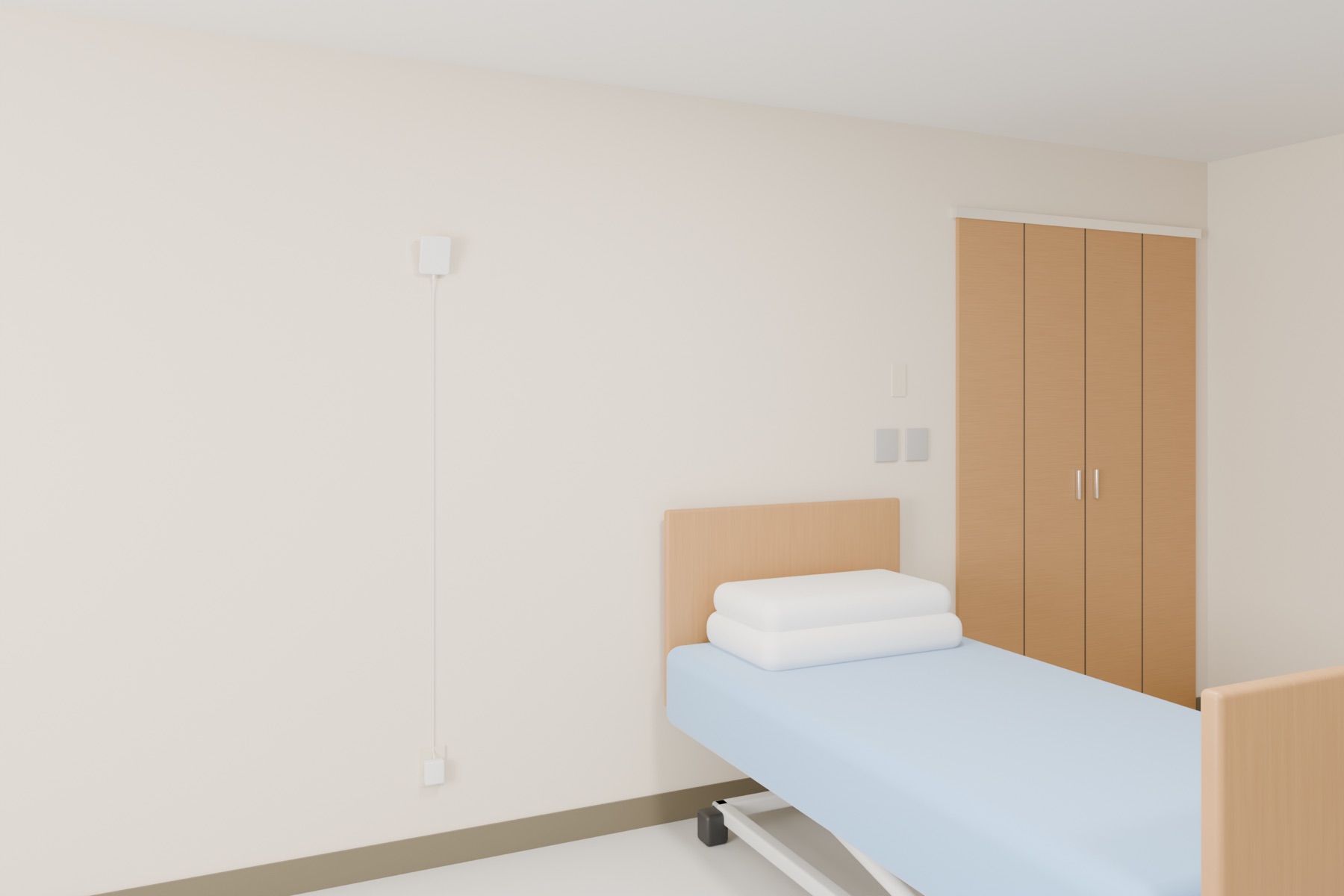
Rendered care-home bedroom: a small white device high on the wall beside a hospital bed, with a thin cable down to an outlet.
Fig. 5A resident room, rendered. The device sits on the wall above the bed and is powered from a low outlet. Nothing is worn and nothing faces the resident.

Validation of the built systems.

Research

Nine peer-reviewed publications and conference abstracts. The through-line is validation: each one tests whether a contactless measurement holds up against a clinical one.

Alzheimer’s & Dementia (Wiley)

  1. 2025

    A Novel Framework for Synthesizing Biosensor Data and the Minimum Data Set to Improve Alzheimer’s Care

    Johnson, B. B.·Alzheimer’s & Dementia

  2. 2024

    Establishing a Remote Patient Monitoring Infrastructure with Starlink in Indonesia for the Aging Population to Improve Alzheimer’s and Dementia Care

    Kresnasandi, I. B., Johnson, B. B.·Alzheimer’s & Dementia

  3. 2024

    Cyclomatic Complexity: A Novel Approach for Analyzing Movement with Machine Learning to Predict Mild Cognitive Impairment

    Johnson, B. B., Bolstad, B. A.·Alzheimer’s & Dementia

  4. 2024

    A Novel Approach to Identify Sundowning with Cyclomatic Complexity Movement Analysis and Noninvasive Ambient Sensors

    Johnson, B. B., Jamadagni, R. S., Kresnasandi, I. B., Bolstad, B. A.·Alzheimer’s & Dementia (AAIC)

  5. 2024

    Integrating Noninvasive Radiofrequency Monitoring Technology Into Clinical Decision-Making

    Bolstad, B. A., Johnson, B. B.·Alzheimer’s & Dementia (AAIC)

  6. 2023

    Contactless Fall Detection with Radio Frequency Sensors for the Aging Population

    Khan, A. A., Johnson, B. B., Snyder, K.·Alzheimer’s & Dementia (AAIC)

ASME Design of Medical Devices

  1. 2025

    Evaluation of a Contactless Pulse and Respiration Rate Monitor Using Frequency Modulated Continuous Wave (FMCW) Radar to Reduce Sudden Infant Death Syndrome (SIDS)

    Johnson, B. B.·ASME Design of Medical Devices Conference, University of Minnesota

  2. 2024

    Noninvasive Patient Monitoring with Ambient Sensors to Monitor Physical and Cognitive Health for Individuals Living with Alzheimer’s Disease

    Johnson, B. B.·ASME Design of Medical Devices Conference, University of Minnesota

AAIC Advancements

  1. 2023

    Biomechanical Classification of Elderly Falls and Improving Long Lie Collapse Events with Contactless Radio Frequency Sensors

    Johnson, B. B., Snyder, K.·AAIC Advancements: Toward Health Equity in Alzheimer’s Disease and Related Dementias

Full reference list at ORCID 0000-0002-4799-6007.

Research direction

The same instrument, further from help.

A resident with dementia cannot report a fall. A crew nine months from Earth cannot wait twenty-two minutes for a second opinion. Both are the same engineering problem: the measurement has to happen without cooperation, and the decision has to happen without a link.

Spaceflight already runs on the constraint I designed the memory care system around. NASA’s in-flight sensor requirements list minimal human interaction alongside low power and compact size. Its Exploration Medical Capability programme exists because one-way comms delay to Mars reaches twenty-two minutes, which ends real-time telemedicine and obliges the crew to detect and treat on their own. That is the argument for on-device inference, stated by someone else, about somewhere else.

  1. 01

    Measured today by

    Wrist-worn actigraphy, worn for the whole mission

    Rest-activity and sleep timing from the room

    Crew rest-activity is measured today with a wearable. The same rhythm, fragmentation, and sleep timing fall out of radar with nothing worn and no compliance to maintain.

  2. 02

    Measured today by

    Doubly labeled water, then mass spectrometry on Earth

    Continuous energy expenditure from movement

    Crew run a chronic energy deficit, up to 5.7 MJ per day, and have lost 1.5 to 10 percent of body mass on nearly every mission. The reference standard needs isotope-ratio mass spectrometry of returned samples, and there is no sample return from Mars.

  3. 03

    Measured today by

    Weekly vigilance tests and self-report questionnaires

    Passive behavioural markers as a supplement

    Vigilance tests cost crew time and questionnaires depend on self-report, which degrades exactly when a crewmember is struggling. Circadian phase shift is among the strongest known predictors of mood episodes, and it is measurable passively.

Not duplicating

NASA already has contactless vital signs: UWB biodetectors read respiration and heart rate through a suit. Repeating that is not the contribution. The open ground is the layer above it, where continuous movement becomes a functional and behavioural state estimate over months, which is the same problem as tracking decline in memory care.

What transfers

The memory care pilot is the analogue. Same sensor class, same zero-cooperation constraint, same need to hold calibration over months in a room nobody is supervising, and a population that cannot be relied on to report its own condition.

Where things stand.

Now · November 2026

Role
Research Professional, Biomedical Engineering, and Research Scholar, Earl E. Bakken Medical Devices Center, University of Minnesota. Founder and Principal Engineer, Ambient Intelligence Inc.
Degree
MS, Medical Device Innovation, University of Minnesota. Conferred May 2025, 3.98 GPA.
Funding
Technical lead on the ODAT-funded memory care study ($248,000, awarded to the University of Minnesota), which runs through March 2027. Helped secure Maslowski Foundation funding for neonatal monitoring.
Translational
Minnesota Partnership translational funding, a State of Minnesota program with the University of Minnesota and Mayo Clinic.
Under review
Principal Investigator on two NIH SBIR Phase I applications submitted September 2026, $1.09M requested: NIA (contactless gait and mobility biomarkers) and NICHD (contactless neonatal vital signs).
Clinical
Memory care study at a Minneapolis facility, pending IRB, Health Information Privacy and Compliance Office, and vendor risk assessment approval.
Recognition
Minnesota Cup 2026 semifinalist, Impact Ventures division: 92 companies selected from 1,262 statewide.

Composer and performer.

Since 2008

I have released nine albums and more than 160 tracks under the name Brian Bradley, with millions of plays on Spotify, and performed a live audiovisual show synchronized with NASA and SpaceX footage.

albums
9albums
tracks released
160+tracks released
composing since
2008composing since

Brian Bradley on Apple Music

Coda

I started this because of what a room can tell you when nobody is asking anything of the person in it. A resident with dementia cannot reliably report a fall, or a bad night, or the slow week that came before it. The instrument has to do the noticing, and it has to do it without asking them to wear, press, or remember anything. That constraint is the whole engineering problem, and it is the reason I would rather build the sensor than buy one.